
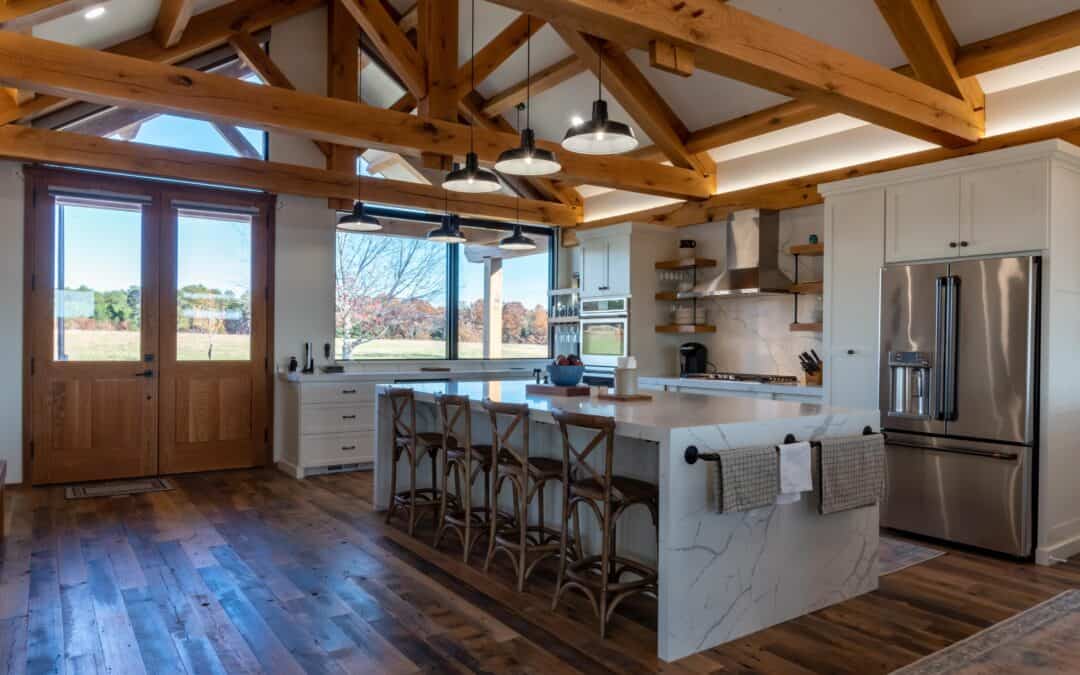
Solid hardwood flooring has one advantage that is hard for most floor coverings to match: it can age with the house instead of being treated as disposable. A quality hardwood floor can be sanded, refinished, and updated years after installation rather than automatically torn out when the surface starts to look worn.
That does not make solid hardwood the right flooring for every room. It moves with humidity, needs a suitable subfloor, and is less forgiving of moisture than engineered hardwood. The goal is not to choose the flooring that sounds the most premium. It is to choose the construction that actually fits the house.
For homeowners in Southern Oregon, subfloor conditions, room location, moisture, plank widths, wood species, and long-term plans should carry just as much weight as color.
What Is Solid Hardwood Flooring?
Solid hardwood flooring is milled from a single piece of real wood. The plank is solid wood from the finished surface through the body of the board rather than a hardwood wear layer attached to a plywood or composite core.
Traditional solid hardwood is commonly available around 3/4 inch thick, although the exact layer thickness and dimensions vary by manufacturer and product. That thick construction leaves usable wood above the tongue-and-groove profile, which is what gives a solid floor its strong refinishing potential.
The National Wood Flooring Association explains that solid wood flooring is made from one piece of wood from top to bottom, is suited to rooms on or above ground, and can be sanded and refinished many times. National Wood Flooring Association — Types of Wood Floors
Each hardwood plank also carries natural wood grain, mineral streaks, knots, color shifts, and other variation based on its species and grade. Those differences are not flaws to eliminate. They are part of the natural character homeowners are choosing when they buy real wood.
Key Benefits of Solid Hardwood
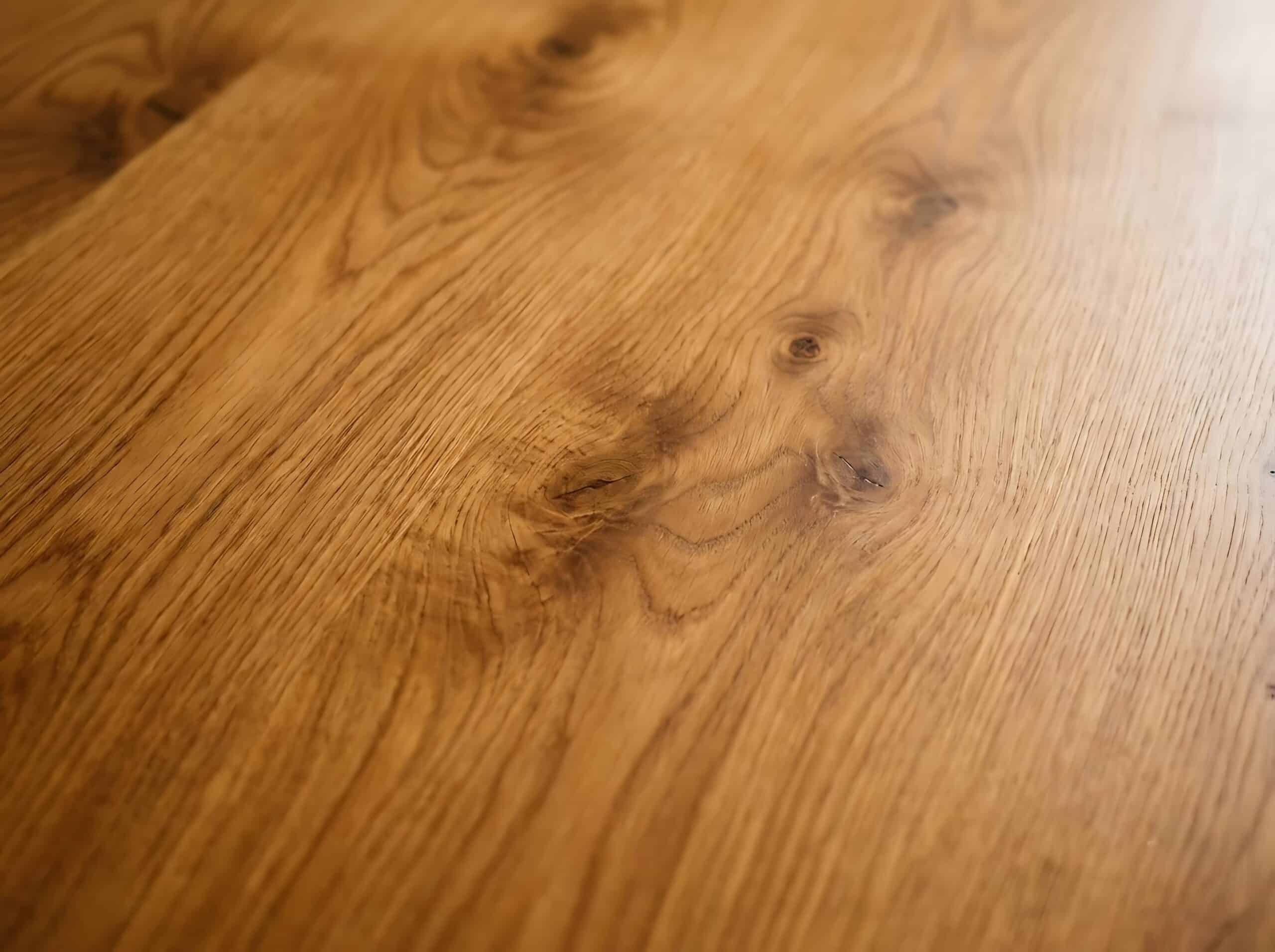
Durability Means More Than Surface Hardness
People often judge hardwood durability by how hard the wood species is. That only tells part of the story.
A harder species such as hickory or maple may resist dents better than a softer wood, but finish quality, moisture control, installation, traffic, pets, and proper care all influence how a hardwood floor ages.
The bigger advantage of solid hardwood is that wear does not necessarily mean the end of the floor. A scratched finish or outdated stain color can often be addressed without replacing the entire flooring system.
That is a different kind of durability than simply choosing the highest hardness rating available.
Solid Hardwood Can Be Sanded and Refinished
The strongest long-term case for solid hardwood flooring is refinishing potential.
Depending on the thickness of the plank, previous sanding, floor condition, and how aggressively earlier work was completed, solid hardwood can often be sanded and refinished multiple times during its service life.
Refinishing removes the worn surface and allows the wood to receive a new stain color and protective finish. That can restore much of the floor’s original beauty or completely change its appearance during a future remodel.
No contractor should promise a specific number of refinishes without inspecting the floor. What matters is how much usable solid wood remains above the tongue-and-groove profile.
Natural Beauty Without Manufactured Uniformity
Real hardwood is supposed to vary.
Red oak, white oak, maple, hickory, walnut, and other species all produce different grain patterns, colors, and natural variation from plank to plank. That natural wood grain creates warmth that is difficult to reproduce with laminate or printed flooring.
Solid wood can work in traditional interiors, rustic homes, and clean modern spaces because the finished style depends on more than the species. Grade, plank width, stain, sheen, and milling all change how the same wood looks in a room.
Solid Hardwood vs. Engineered Hardwood
Solid hardwood and engineered hardwood can look nearly identical once installed. Their construction is what separates them.
Solid hardwood is one solid piece of wood. Engineered hardwood flooring uses real hardwood at the surface over a layered core, commonly made with plywood. That construction generally gives engineered flooring greater dimensional stability as humidity and moisture conditions change.
For a deeper breakdown of veneer thickness, core construction, and installation methods, see Oregon Floor Works’ engineered hardwood flooring guide.
When Solid Hardwood Has the Advantage
Solid hardwood makes the most sense when the home has an appropriate wood subfloor, the room is on or above grade, and long-term refinishing potential matters.
It is also a strong option for homeowners who want site-finished flooring or a particular custom stain color. Because the floor can be sanded after installation, site finishing can create a smooth, continuous appearance across the room.
For a home you expect to keep for decades, the ability to restore or restyle the same solid wood floor later can carry more value than added installation flexibility today.
When Engineered Hardwood Is the Smarter Choice
Do not force solid hardwood into a room simply because it sounds like the more traditional product.
Engineered hardwood is often the better flooring option over concrete, below grade, or in spaces where greater dimensional stability matters. Some engineered hardwood ranges also handle wider plank formats and changing conditions better than traditional solid boards.
A quality engineered product with a substantial wear layer is still real hardwood flooring. In the wrong location, choosing solid hardwood over engineered is not an upgrade. It is an unnecessary risk.
Where Does Solid Hardwood Flooring Work Best?
Living Rooms, Bedrooms, and Dining Areas
Living rooms, bedrooms, dining rooms, hallways, and many open concept spaces are natural places for solid hardwood flooring when the subfloor and indoor conditions support it.
Running the same hardwood through connected rooms can create a much more cohesive floor than breaking the house into several materials.
Living rooms are particularly good candidates because hardwood adds warmth without making the room difficult to furnish later. Furniture, rugs, and paint can change while the floor remains a consistent foundation.
Where Solid Hardwood Needs More Caution
Basements are usually not the place to insist on solid hardwood. Below-grade conditions and concrete slabs create moisture and installation considerations that often favor engineered hardwood.
Bathrooms and other frequently wet spaces deserve similar caution. A durable finish provides water protection against normal spills, but it does not make natural wood waterproof. Standing water or moisture reaching the floor from below can still cause movement, cupping, or warping.
Kitchens can work with solid hardwood when spills are cleaned quickly and homeowners are comfortable with the natural wear that comes with an active room.
Choosing the Right Wood Species
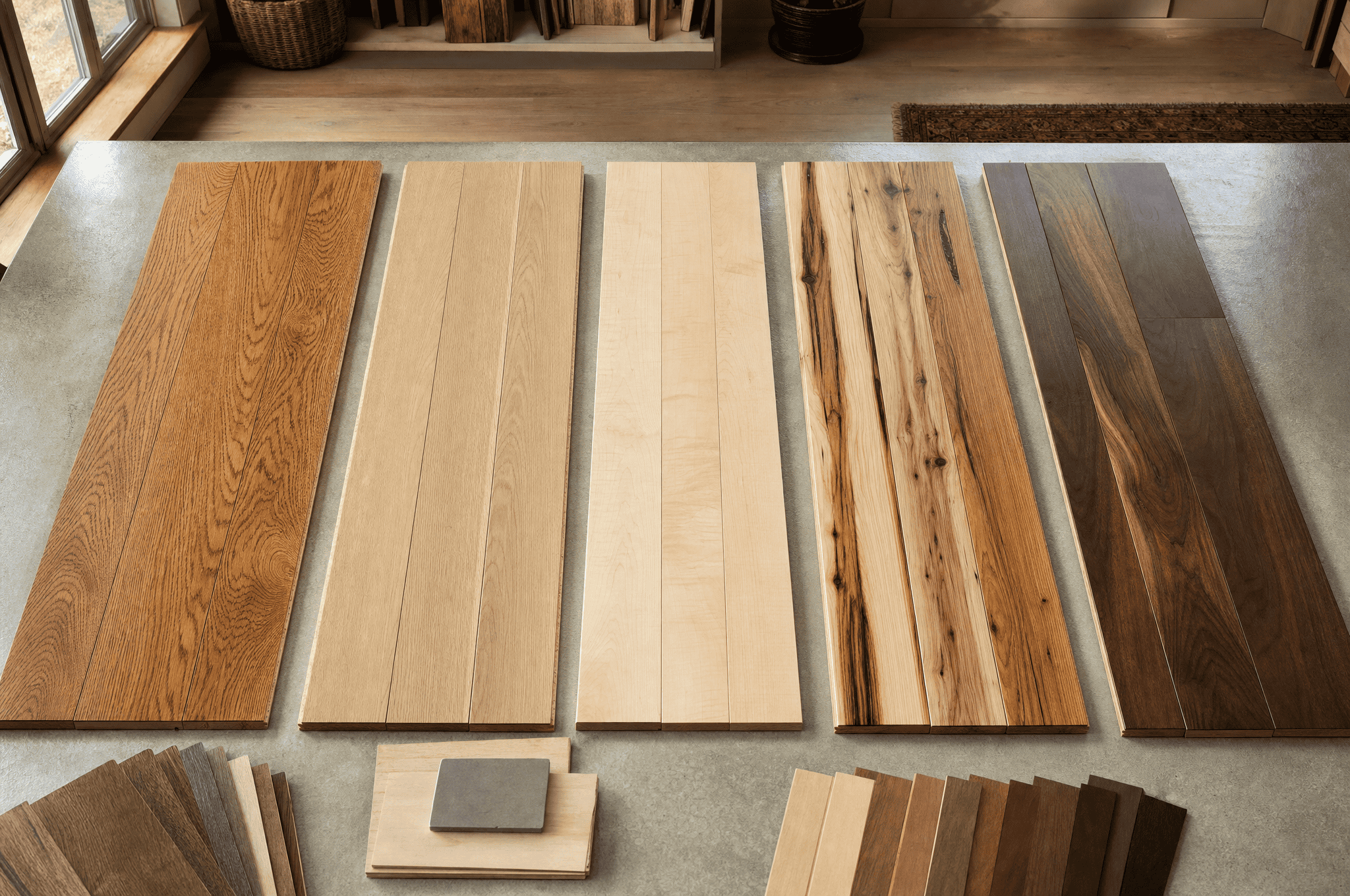
Choosing a species should start with how you want the floor to look and live, not with whichever wood has the highest number on a hardness chart.
For a broader look at solid, engineered, species, milling, and other types of wood flooring, see our Types of Wood Flooring: A Guide to Hardwood Options.
Red Oak and White Oak
Oak remains one of the most practical hardwood flooring options because it provides a useful balance of durability, availability, grain variation, and finish flexibility.
Red oak typically has a warmer undertone and more pronounced grain. It works naturally in traditional and rustic rooms but can also be updated considerably through stain and finish selection.
White oak generally has a more muted appearance and is frequently used with natural, medium-brown, and lighter finishes. It can feel traditional or modern depending on grade, plank width, and finish.
Neither oak automatically wins. The better match depends on the look of the room and the particular flooring product.
Maple, Hickory, and Walnut
Maple has a tighter, smoother grain than oak and often creates a cleaner appearance. Its lighter natural color can work well in modern spaces, although maple can be more challenging when a very dark or heavily pigmented stain is the goal.
Hickory brings exceptional hardness along with strong variation between boards. That combination makes hickory a great choice when homeowners genuinely want a floor with movement and natural character.
Walnut moves in the opposite direction. It is softer than oak, maple, or hickory, but the deep brown tones and rich grain give it a distinctive look. Choosing walnut means accepting that dents and wear may appear sooner.
You may also encounter products labeled Brazilian oak or other imported species. Exceptional hardness alone does not make an exotic species the best hardwood flooring for a home.
Plank Width, Grade, and Finish Change the Entire Floor
Two floors made from the same wood species can look unrelated once plank width, grade, milling, stain, and finish change.
Narrow oak flooring can create a classic wood-floor appearance. Wider white oak planks with a low-sheen natural finish can feel much more modern.
Rustic grades show more knots, mineral marks, and color variation. Cleaner grades reduce some of that visual movement. Neither is inherently higher quality from a design standpoint.
The mistake is selecting a small showroom sample without thinking about what hundreds of square feet of that material will look like together.
Hardwood Flooring Installation Matters as Much as the Material
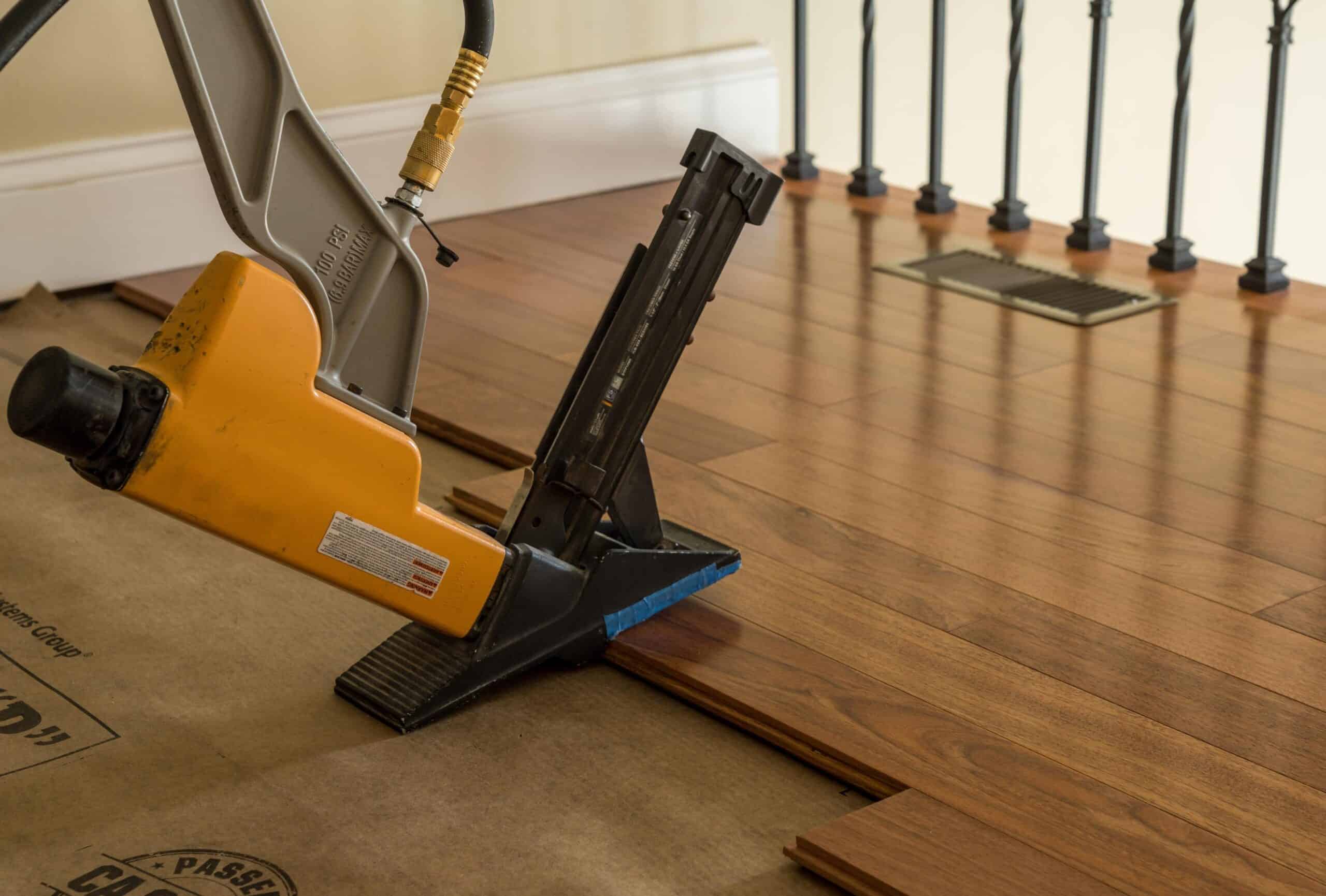
Good solid hardwood can still become a bad floor when the site is not ready for it.
Before hardwood flooring installation begins, the contractor should evaluate the subfloor, moisture conditions, room layout, and the hardwood itself.
Proper acclimation is especially important with natural wood. Acclimation does not mean leaving flooring in the house for an arbitrary number of days and assuming it is ready. The installer needs to determine whether the wood and jobsite conditions are appropriate before fastening the floor.
For a deeper explanation of moisture testing, subfloor preparation, layout, expansion gaps, and fastening, see our hardwood installation guide.
Why Professional Installation Matters
Traditional solid hardwood is commonly nailed or stapled over a suitable wood subfloor.
The installer also has to account for seasonal movement, expansion space, transitions, wall lines, plank layout, and the way natural variation is distributed across the room.
That is where professional installation earns its value. One imperfect plank is rarely the expensive mistake. Installing an entire floor over the wrong substrate or under the wrong moisture conditions is.
In Southern Oregon, those decisions should be based on the actual house rather than a generic installation rule.
Proper Care Protects the Floor You Paid For
Solid hardwood offers exceptional durability because the material can remain useful for decades, but the protective finish still experiences everyday wear.
Dirt and grit can act like sandpaper under shoes. Furniture can scratch the surface. Water can reach seams when spills are ignored.
Regular sweeping or vacuuming, prompt spill cleanup, and cleaning products approved for the finish are usually more useful than aggressive cleaning routines.
With proper care, hardwood flooring can often be recoated before severe wear reaches the wood. When more extensive wear eventually develops, a floor with enough usable material may be refinished instead of replaced.
That ability to renew the same floor is the real durability advantage of solid hardwood.
Is Solid Hardwood Flooring Right for Your Home?
Solid hardwood flooring is a strong choice when the conditions support it and long-term refinishing potential matters.
It works particularly well in living rooms, bedrooms, dining rooms, hallways, and connected living spaces over suitable wood subfloors. Homeowners also get a wide selection of species, plank styles, stains, finishes, and grades without giving up the natural beauty of real wood.
But solid hardwood should not be treated as the automatic premium choice. If the project involves concrete, below-grade space, or conditions where greater moisture resistance and dimensional stability are important, engineered hardwood may make more sense.
Oregon Floor Works helps homeowners in Medford and throughout Southern Oregon compare solid and engineered hardwood flooring, evaluate the room and subfloor, and choose a flooring system that fits the home before installation begins.